Image generation allows you to get original creatives for your advertisements without involving designers. Images are generated individually for each advertiser: based on the text about your product or service and its features.
Created creatives can be edited, for example, replaced or cropped. You can use any of the resulting variants in your ads.
How to generate an image
It is possible to generate an image for an ad:
- In the step of creating an ad campaign;
- At the ad creation step.
When generating a query, it's important to follow certain rules. Learn more about how to compose a query
At the step of creating an ads campaign
- In the “Campaigns” section, on the “Campaigns” tab, click “Create”.
- Fill in the “Advertised object” field.
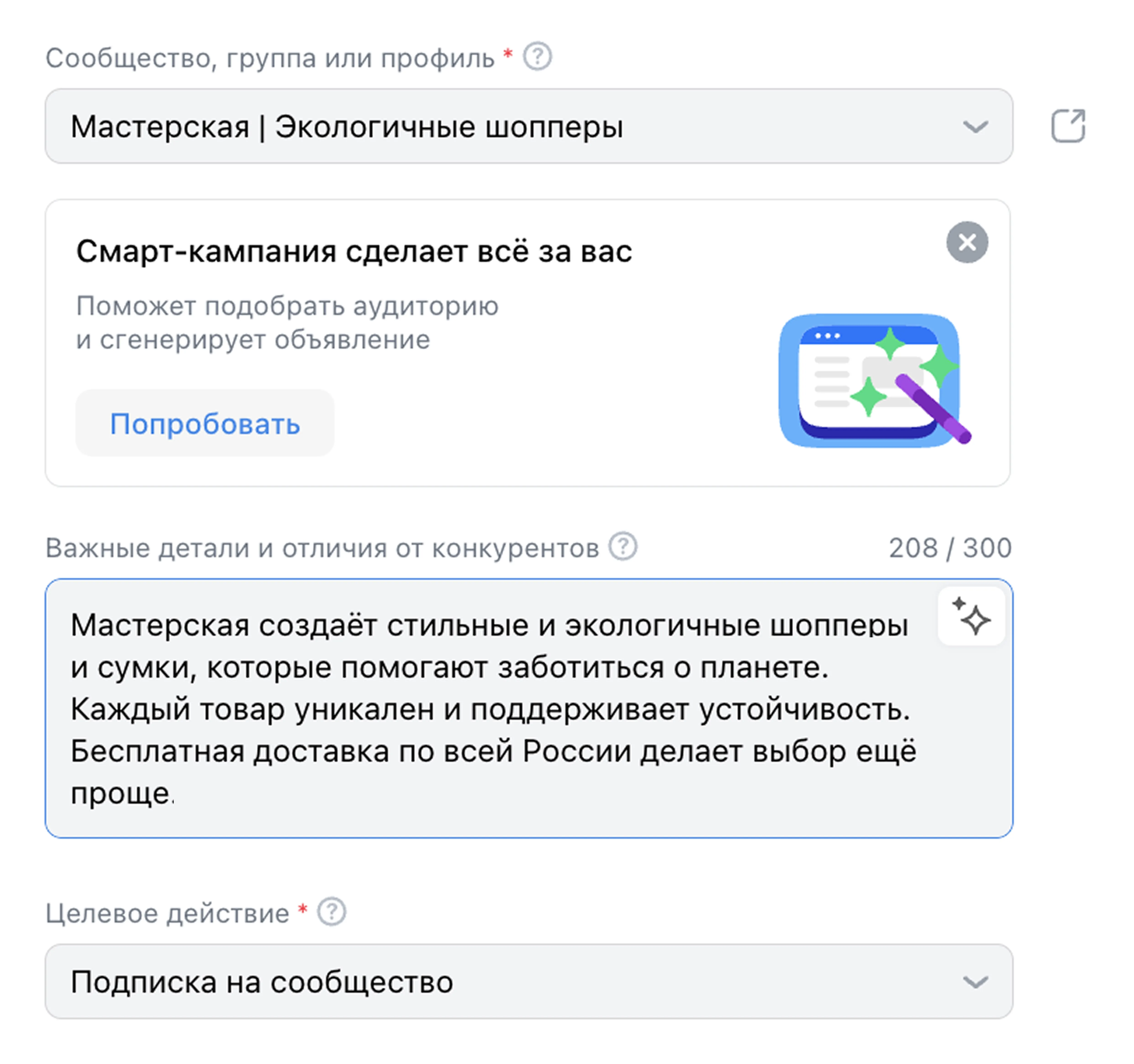
- Go to the “Important details and differences from competitors” field. You can choose the neural network description option or freely describe the details and distinctive features of the promoted object. This description will not be used in the ad itself, the algorithms will generate images based on it.
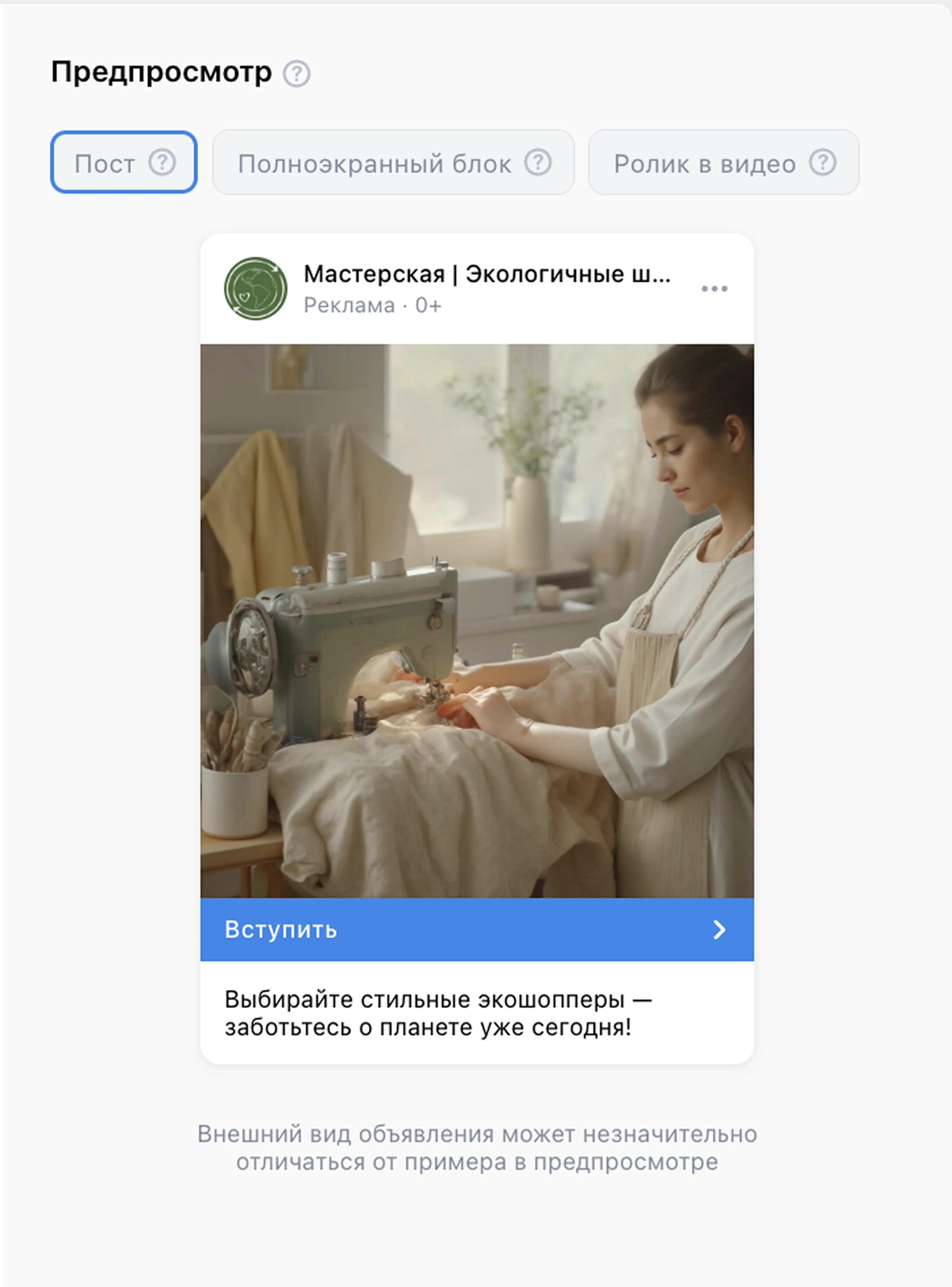
- During the ad creation step, you'll be presented with a set of 2 generated images and 1 image from the promotional object. To check how the image will look in the ad, hover your cursor over it.
The generation is based on the analysis of your promotion object and the description of the product or service. If the proposed pictures do not fit, click on the magic wand to change the request and generate more. In total you can generate up to 4 images.
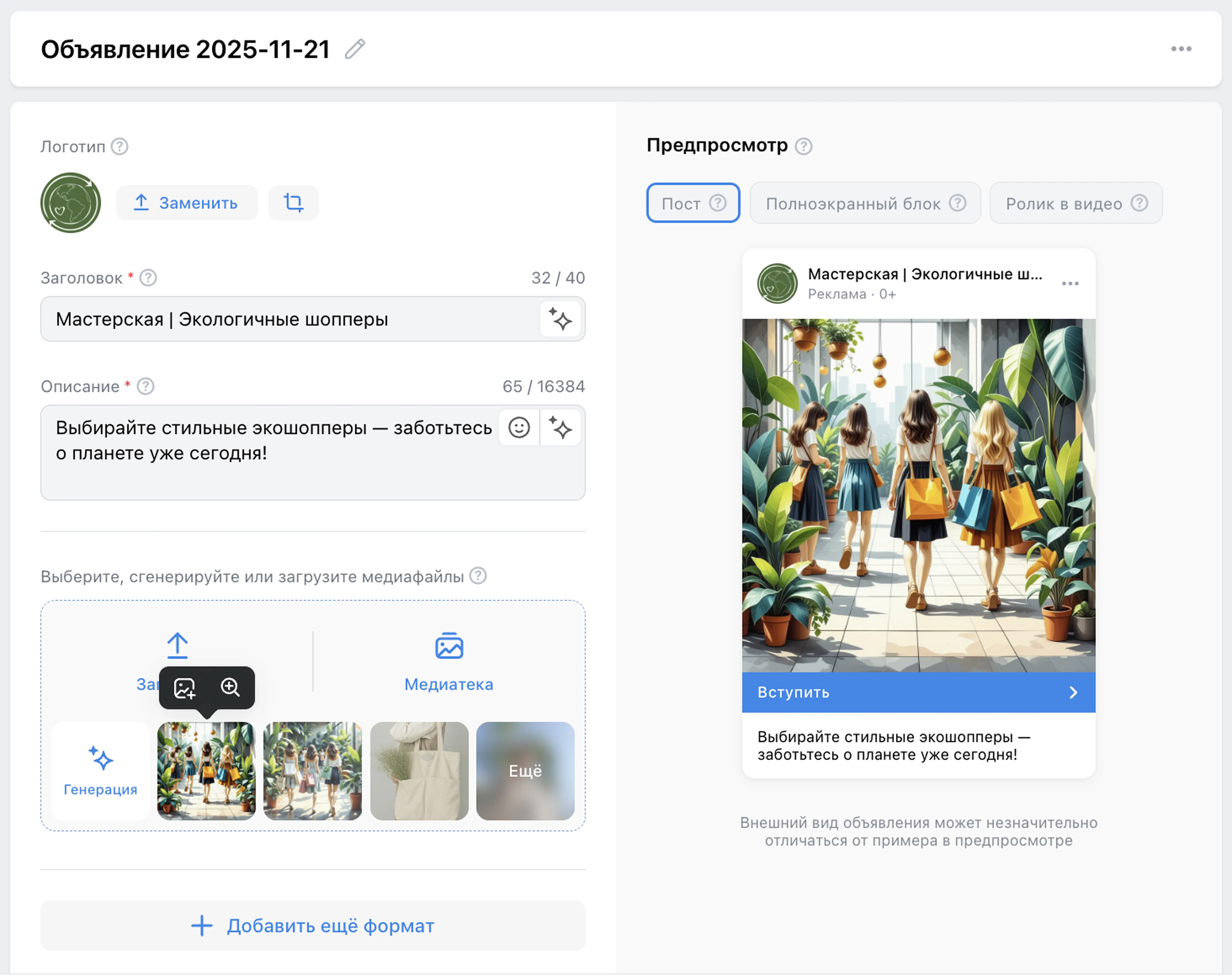
In the step of creating an ad
This option can be used if you skipped entering details and differences at the campaign creation level or want to generate different images.
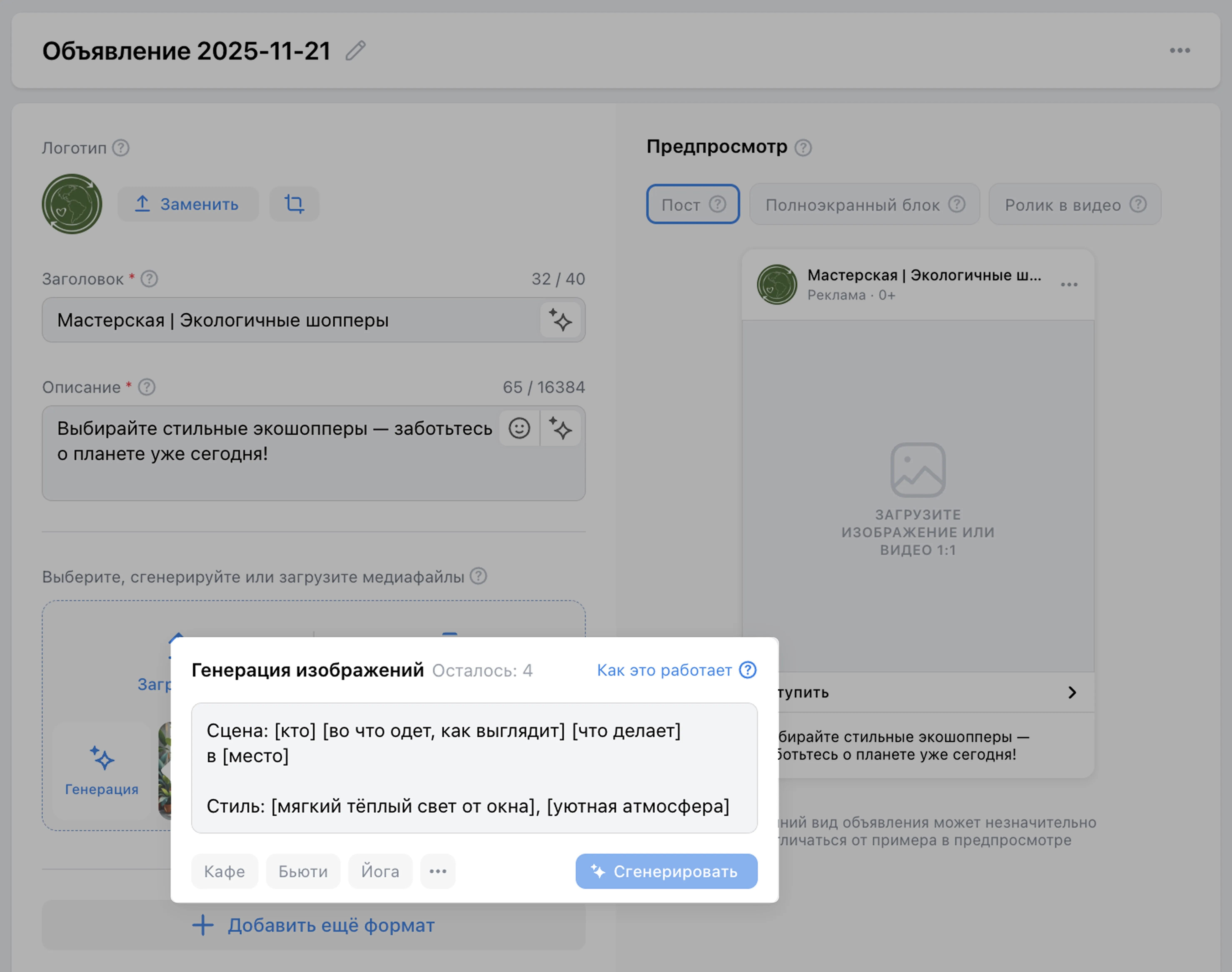
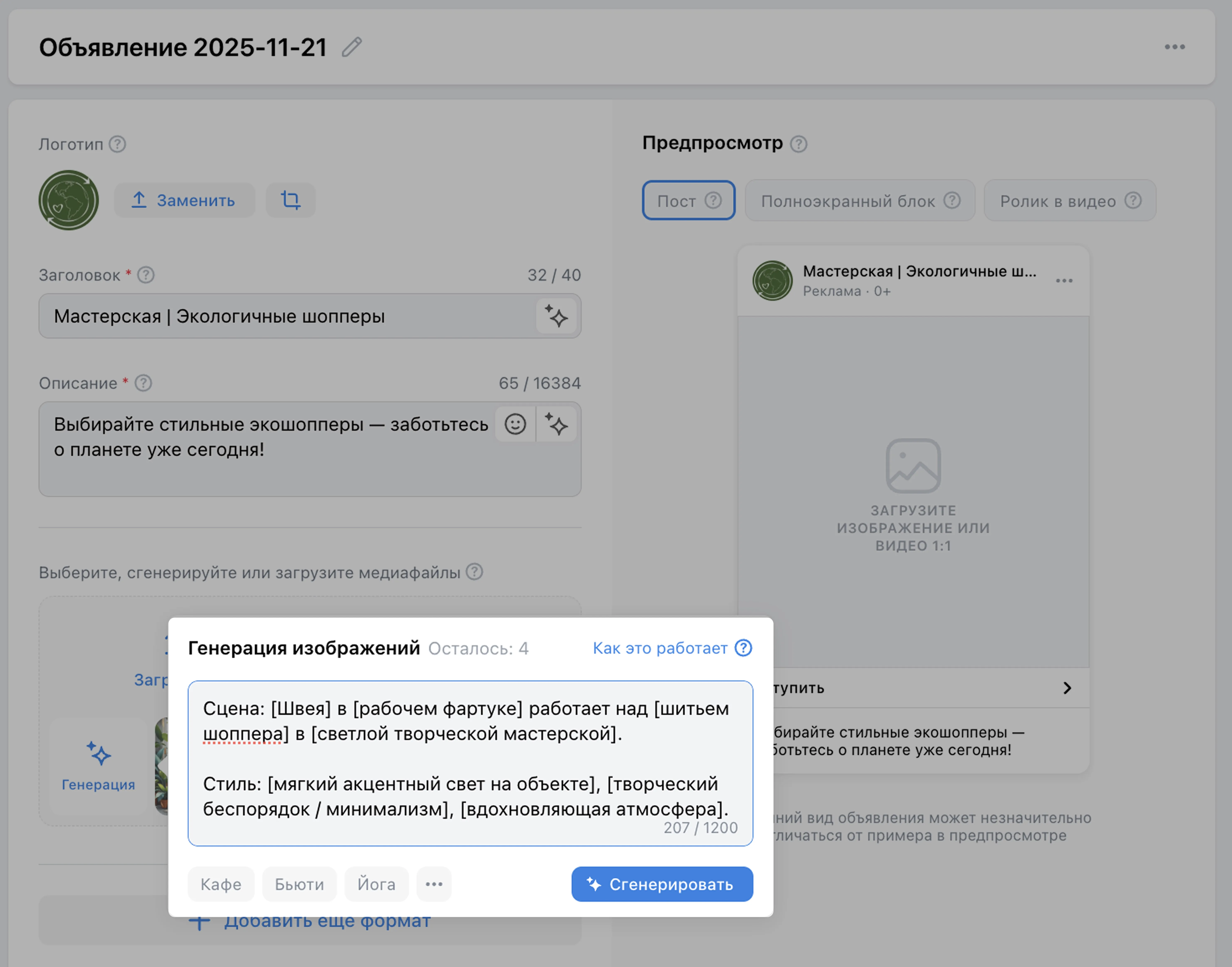
- In step 3 of creating an ad, in the media file section, click the “Generate” button.
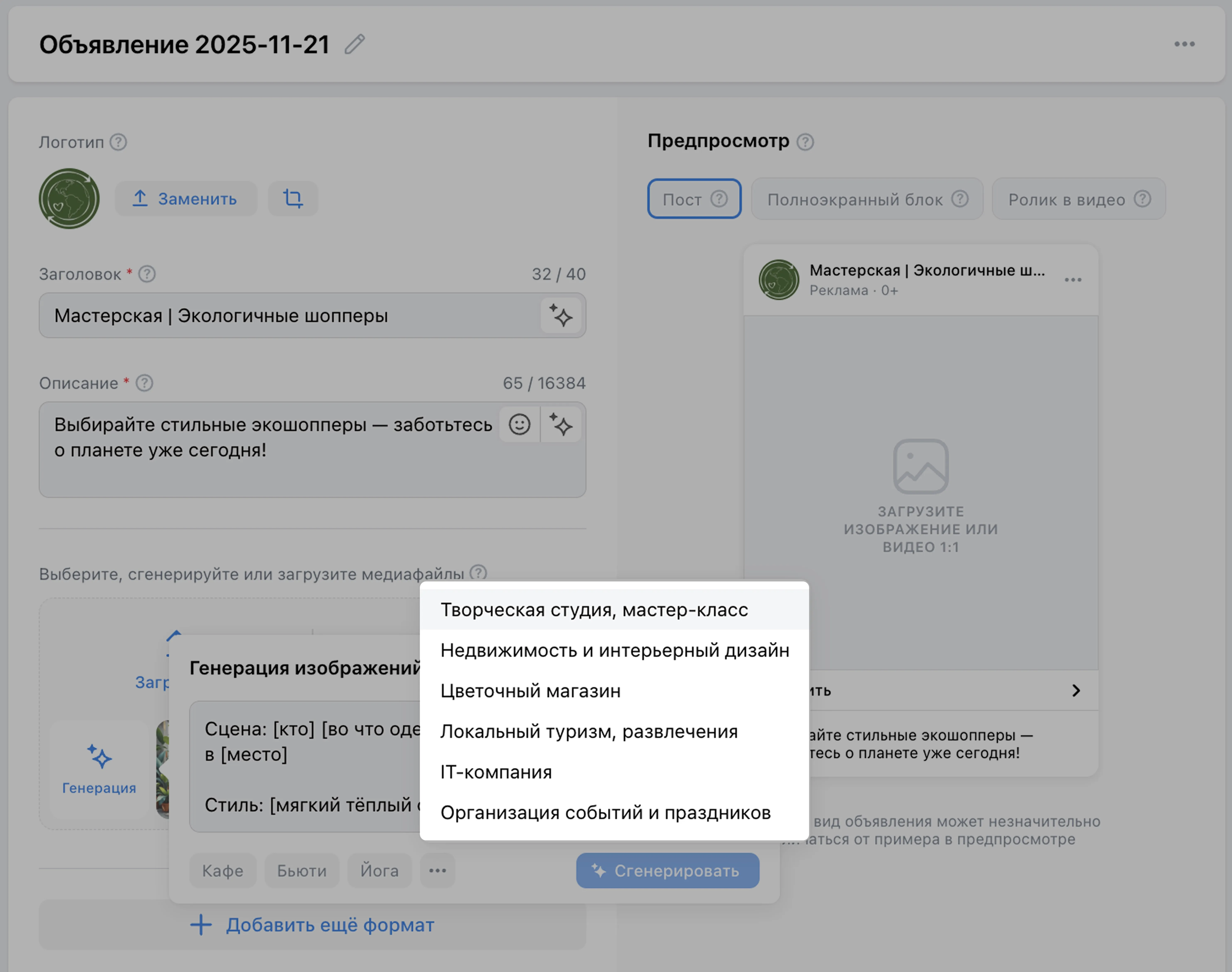
- A prompt entry field will appear. The default template is displayed. You can also select a prompt template by clicking the three dots.
- Fill out the prompt template, replacing the text in square brackets. This description won't be used in the ad itself; algorithms will use it to generate images.
- Smart algorithms will prepare the image. You can generate a maximum of 4 images.
How to compose a request
A prompt template will help you successfully generate an image. Templates are selected for key business areas.
When using a template, simply change the words in square brackets. The more specific the prompt, the better the result.
What is important to consider
1. Write simple, short sentences. The prompt template contains an optimal query length.
2. Follow the template structure:
Scene: [who] [what they are wearing, how they look] [what they are doing] in [place]
Style: [soft warm window light], [cozy atmosphere]
3. Specify who or what you want to see in the image.
Example: "A young woman."
4. Describe the clothing, accessories, colors, and appearance details.
Example: "In a green dress, with short hair and gold earrings."
5. Use action verbs that are easy to depict. Avoid abstract actions: "dreaming," "thinking."
Example: "Smiling, holding a cup of coffee."
6. When describing the location, provide a specific setting, environment, and background.
Example: "In a cozy coffee shop, at a table by the window."
7. Add adjectives to set the mood of the scene. Avoid abstract adjectives: "beautiful," "cool."
Example: "Soft warm light from the window, cozy atmosphere, pastel colors."
What should you give up
1. Negation. Avoid words like "not," "without," "excluding," and similar words. The neural network doesn't recognize negative particles. If you write "a woman without glasses is reading a book," you'll get a woman with glasses.
2. A large number of objects and details in a single sentence. If there are too many details, the neural network may miss something.