
The VK media buying team ran ads for a mass-market multiplayer strategy game — and the result was a significant boost in campaign ROI by D3 and D7. In this case study, we break down how the platform's tools help you effectively advertise mobile games and apps, test audiences and creatives, and drive better campaign returns.
Campaign goals
The campaign's goal was to find the right combination of audiences, creatives, and ad placements that would help scale traffic acquisition while also improving return on ad spend.
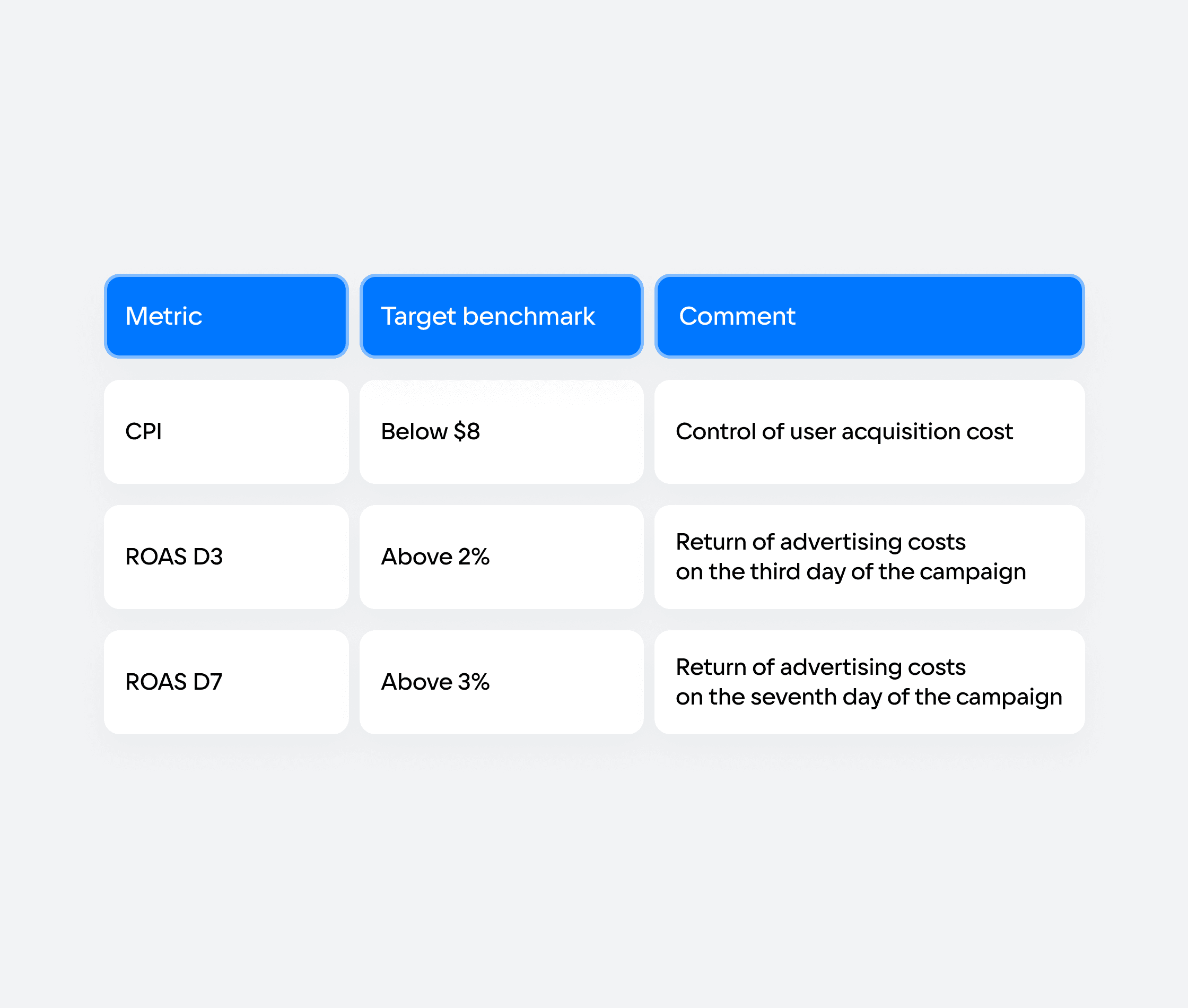
The team was tasked with improving the quality of the traffic they were buying and keeping key metrics within the benchmarks established from previous ad launches.
- 9 monthsDuration of the advertising campaign
Campaign setup
The VK media buying team used two types of campaigns: one optimized for app installs and the other for in-app purchases. From the initial tests to the final scaling, more than 25 campaigns and about 400 ad groups were launched.
The team chose “Min price” as the bidding strategy, and a daily budget as a limit. This approach made it possible to quickly redistribute expenses among the bundles, manage traffic precisely, and respond more quickly to changes in the auction.
Creatives
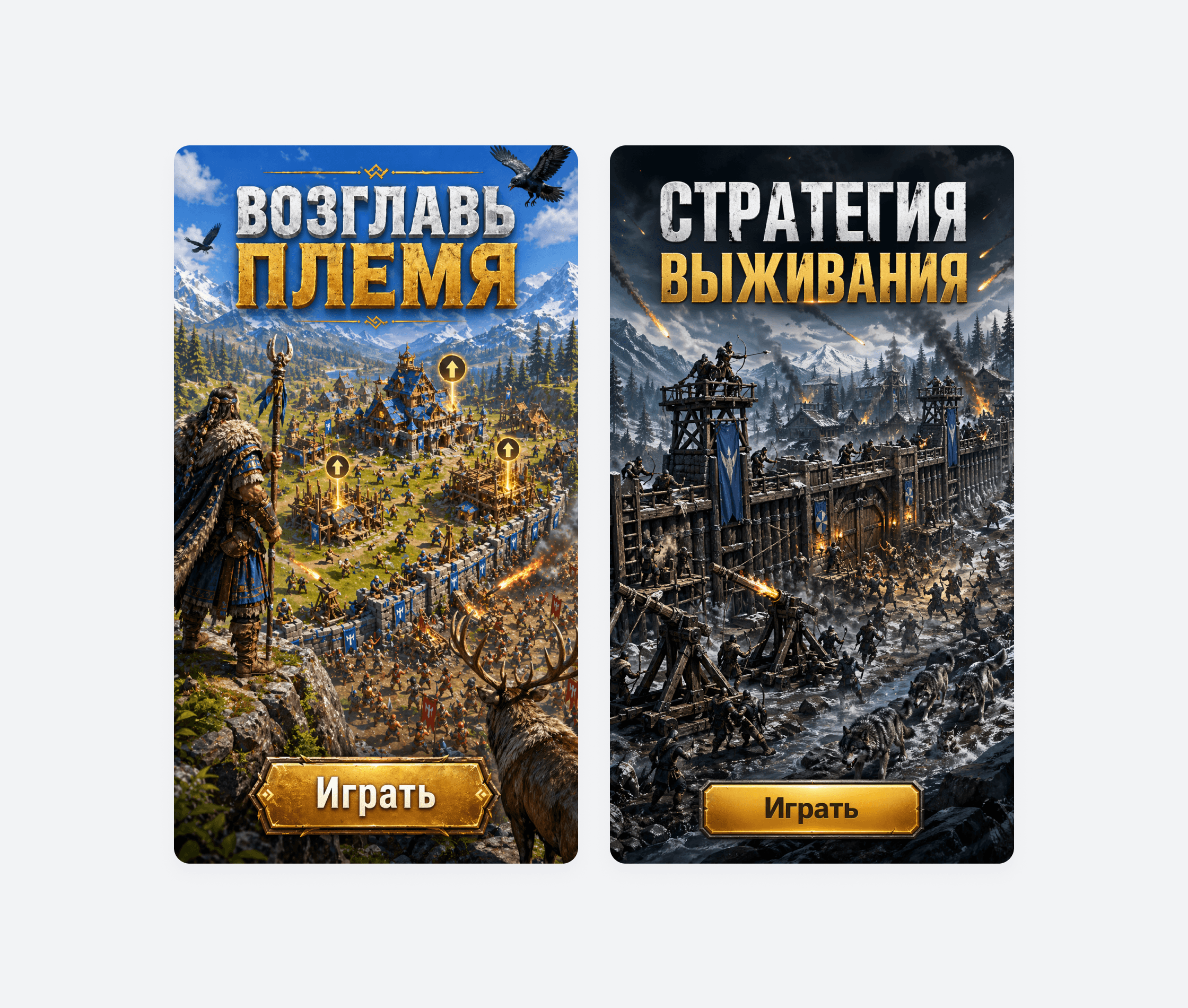
The team tested 50 static and 60 video creatives, and used the auto generation for video creatives available in VK Ads. This tool allows you to create three video options from static images and text. In particular, auto‑generation was used for launches with creatives for RuStore.
To reduce the impact of random auction factors, each creative was tested under comparable conditions and launched in three iterations. Video auto generation proved to be a convenient way to quickly obtain additional creative options and their various formats.
According to the test results, static creatives demonstrated the best results when promoting the game in RuStore. This confirmed the need to adapt creatives for ad placements.
Advertising campaign optimization
Traffic quality was assessed in AppsFlyer. In the VK Ads dashboard the team tracked such metrics, as CPI, CPM, CTR, CR, and budget implementation. Based on the accumulated statistics, the team adjusted the settings: audience age, budget, and ad placements.
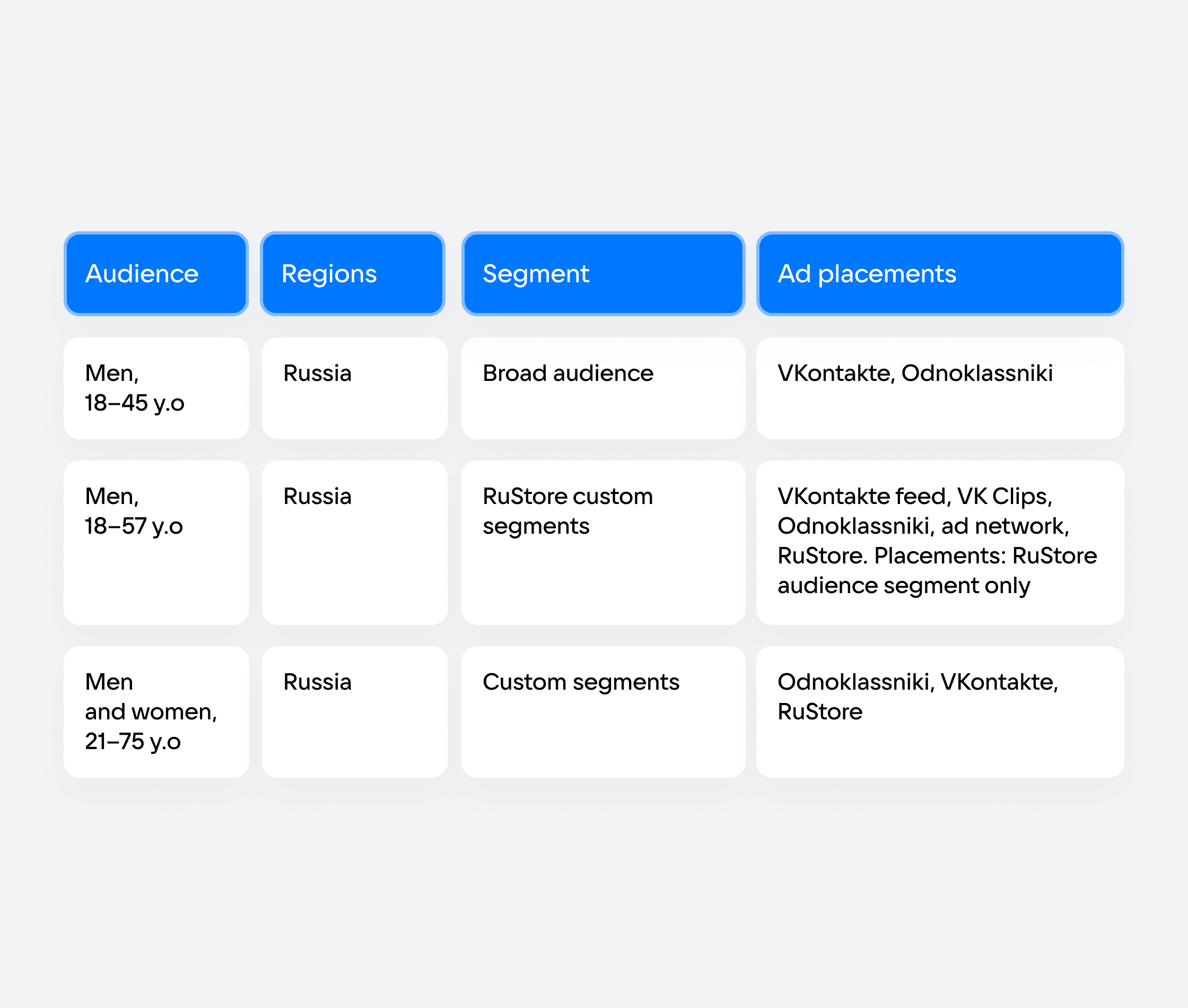
As a result of the tests, three most effective targeting combinations were identified:
Scaling
Once the top-performing combinations were identified, the team moved on to scaling. New combinations were introduced gradually to avoid compromising traffic quality and to keep key metrics fully under control.
Campaign Results
Over nine months of running campaigns, the team successfully scaled traffic acquisition and improved key performance metrics significantly:
- 2.6x increase in D3 ROAS compared to pre-optimization results,
- 3.3x increase in D7 ROAS compared to pre-optimization results,
- 10% reduction in cost per install (CPI).
Creative testing and the shift to static formats were the key drivers behind the KPI improvements. Additional gains came from a holistic optimization approach: reallocating budget across campaigns, refining audience segments, adjusting age and gender targeting, and making timely placement changes. Prior to launch, traffic acquisition volume was minimal — but over the course of the campaign, the team was able to scale the budget several times over without sacrificing quality. Moving forward, the client continued to ramp up volume by leveraging new winning combinations.
Egor Erokhin, senior buying manager, VK:
“The lowest CPI isn't always the best result. For strategy games, it's not just about driving installs at a low cost — audience quality matters just as much. A higher-cost user can actually be more valuable if they spend more time on the product, return to the game more often, and are more likely to make a purchase. That's why CPI should always be evaluated alongside retention rate, ROAS, and projected LTV / revenue metrics”.